
HOST'S BLIND SPOT
How systems ingest, distort, and fossilise human memory
(Scroll down to read the story)
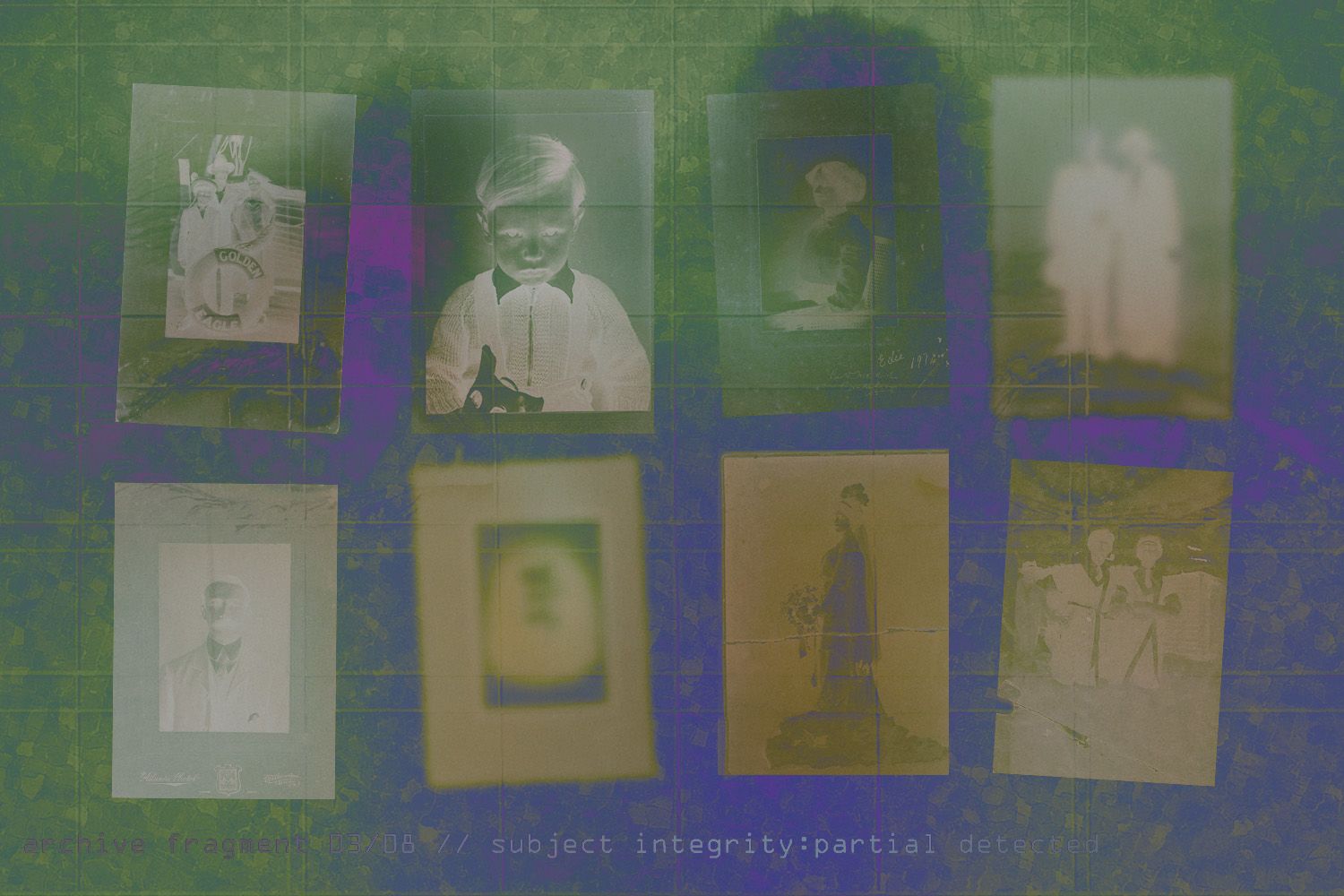

This narrative follows a system as it encounters the human archive. Images enter, are held, disturbed, and slowly rearranged. What persists is not memory as it was lived, but memory as it is processed, altered by a logic that does not recognise intention, attachment, or loss.
What follows is not an explanation of the work, but a tracing of its movement. Visual fragments, processes, and material outcomes are set alongside the ideas that shaped them, allowing meaning to drift as it passes through the system.
This narrative accompanies the digital exhibition hosted in Kunstmatrix.
Signal detected. Process initiated.

Why “Host Blind Spot”?
The project takes shape in the space between what we remember and what a system perceives. Images, archives, and bodies are offered as material, but what is returned is something else, reorganised according to patterns that remain largely invisible to us.
The term host names what receives and sustains this process. The blind spot marks the point at which perception fails: where non-human systems detect, classify, and transform material beyond the limits of human awareness. The title acknowledges this asymmetry, and the quiet imbalance it introduces.
The System Without Us
The system does not wait for our attention. It continues to sort, ingest, and reorganise material whether or not it is observed. Its operations unfold alongside us, but not for us.
In this space, meaning is not addressed to a viewer. It emerges as a by-product of processes that follow their own internal priorities, running parallel to human understanding rather than in service of it.
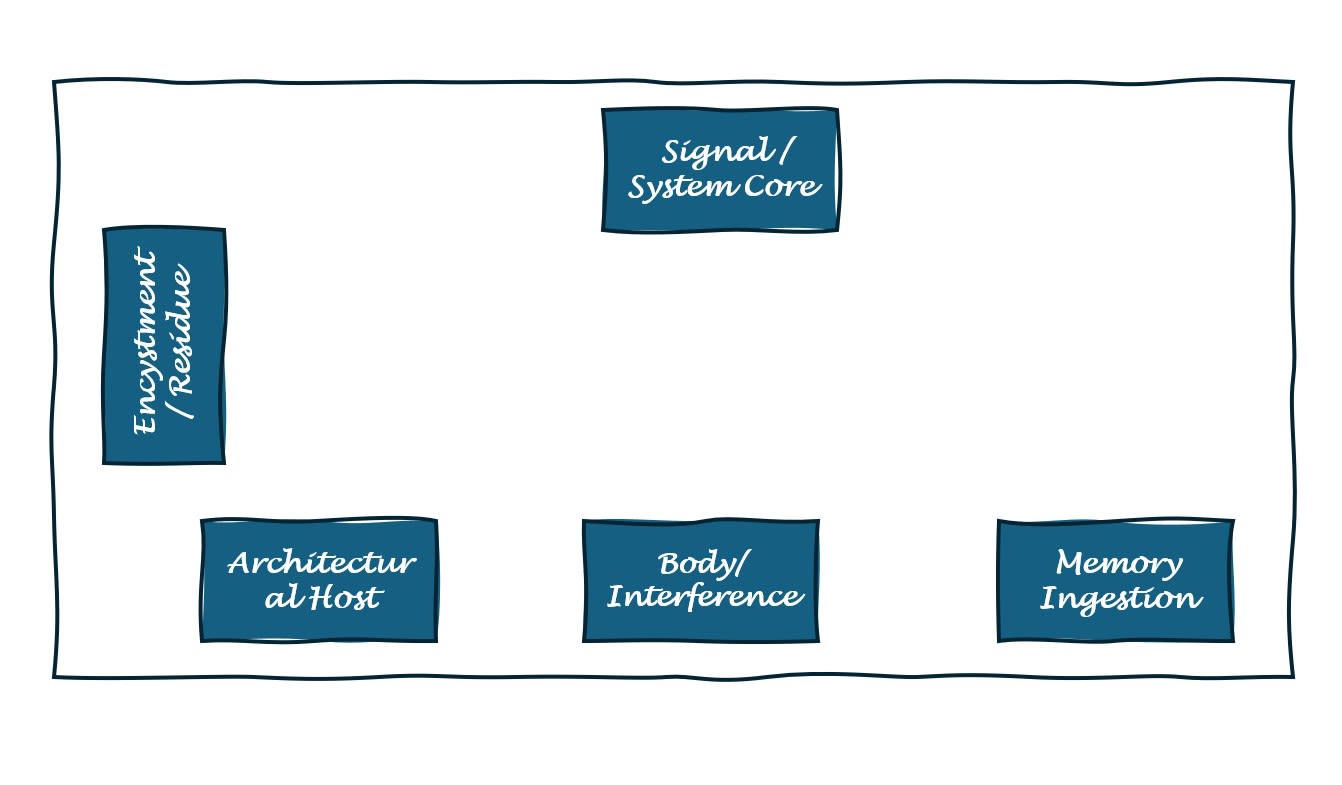
The exhibition unfolds across five interconnected zones that track the movement of a system through memory, body, and environment. Each stage marks a shift in how material is perceived and processed: from initial signal, to ingestion of archives, to interference with the human body, to occupation of architectural space, and finally to material residue. This structure holds the narrative that follows.

What the Host Forget
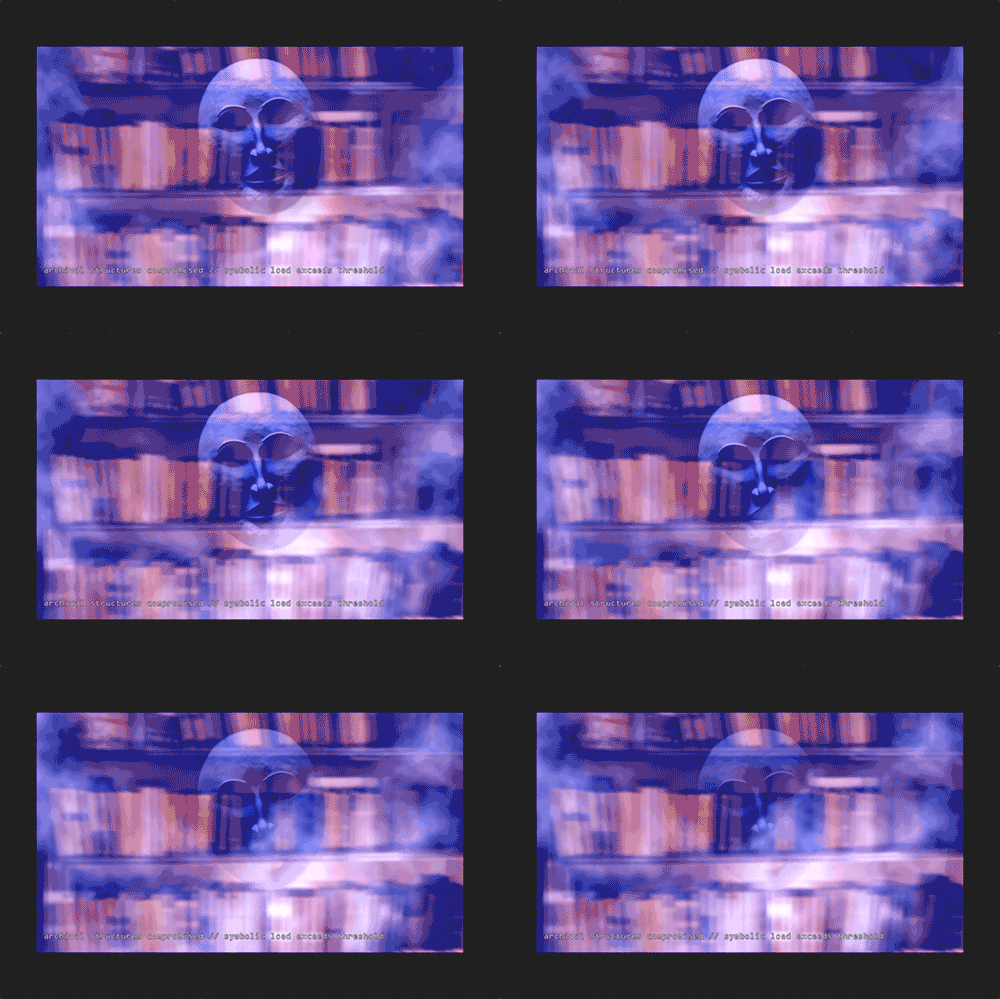
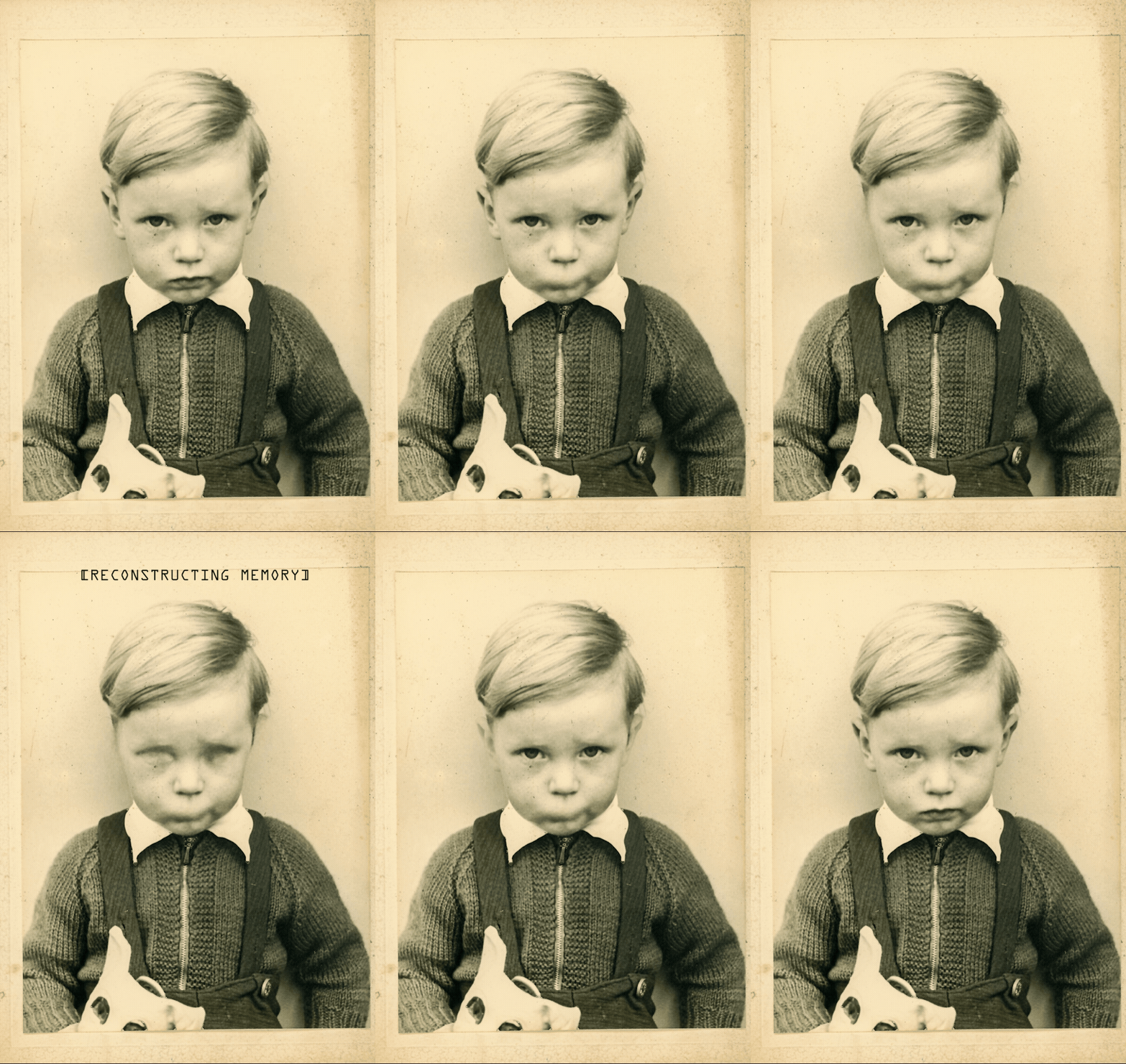
This video marks the moment where memory is no longer held, but processed. Images drawn from a personal archive pass through a system that neither recognises their origin nor preserves their narrative weight. What was once remembered is reorganised according to patterns that privilege continuity, repetition, and drift.
For the host, forgetting is experienced as loss. For the system, it is a condition of operation. What unfolds here is not erasure, but displacement: meaning slips, coherence softens, and memory persists only as residue.

Input: The Human Archive
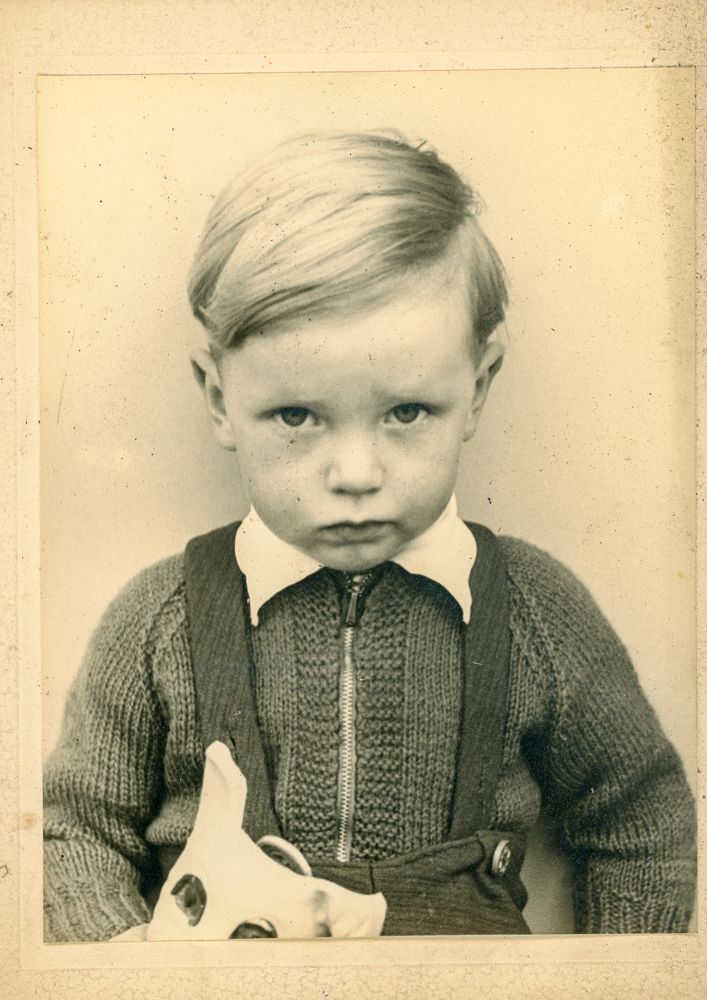
The system draws its material from a personal photographic archive. Images enter not as memories or narratives, but as available structures — scanned, indexed, and prepared for processing. Their original meaning does not disappear, but it no longer determines how they will be read.
What enters the system is not a story, but an image poised for transformation.

What the System Does to Memory
Once ingested, images remain visible but lose narrative authority. The system does not erase memory; it reorganises it, privileging structure, pattern, and anomaly over personal significance. What survives is legibility without ownership.
Memory becomes a surface through which processing is revealed
The Threshold of Ingestion.
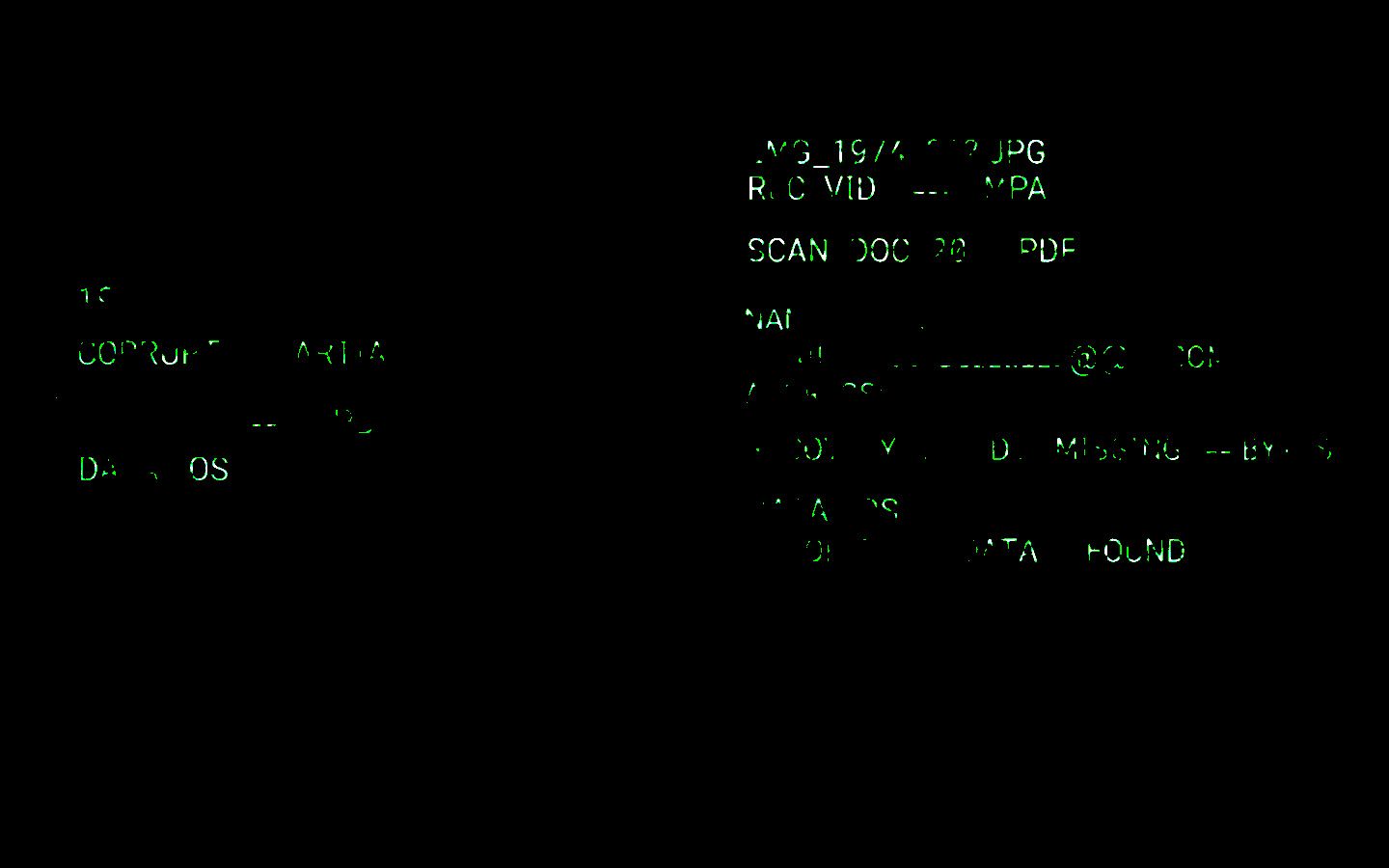
At this stage, images cross a functional boundary. Filenames, timestamps, scanning artefacts and recognition errors begin to matter more than content. These fragments signal that memory has entered a system designed to read structure rather than meaning.
The photograph becomes legible to the machine before it remains legible to us.

Veils: Why They Exist
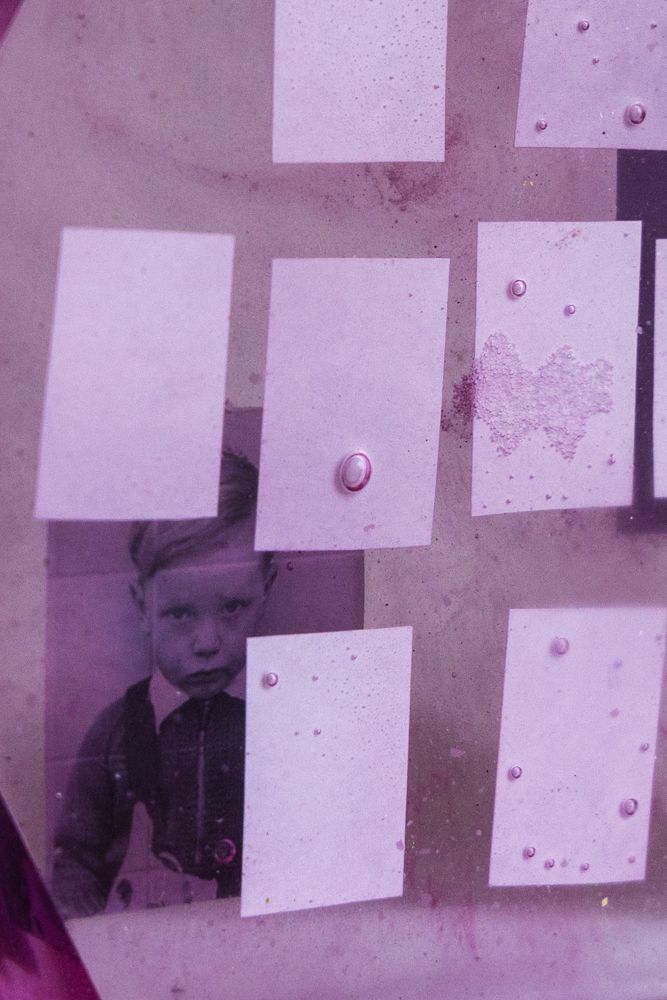
The veils do not conceal images; they interrupt them. Printed with fragmented metadata and partial system traces, they introduce misalignment and obstruction that echo the way machine vision parses information. What remains visible is incomplete by design.
The veil marks the moment where access becomes partial and interpretation unstable.

Body / Interference
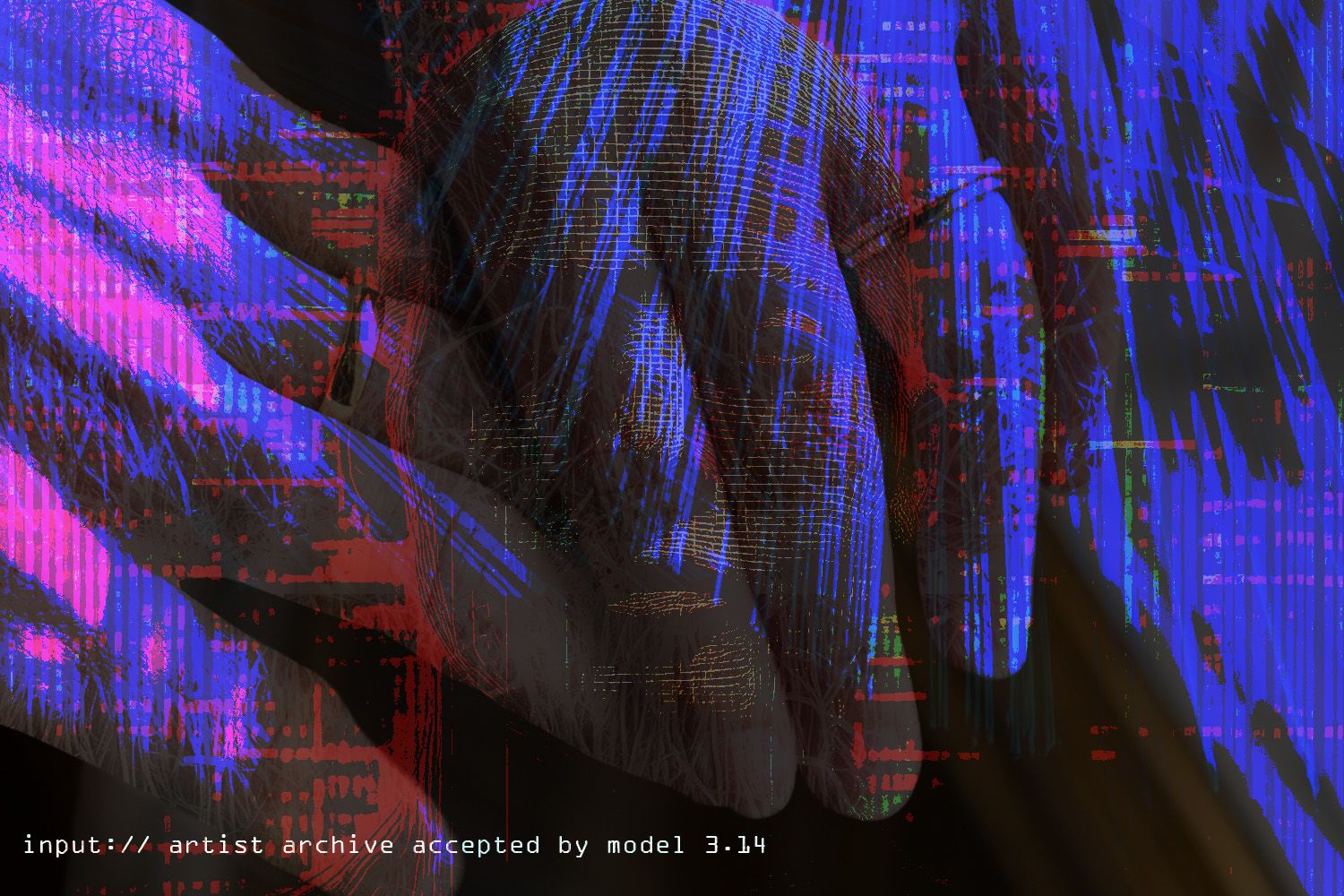
In this phase, the human body enters the system as data to be captured and stabilised. Biometric and visual recognition processes attempt to resolve identity, but instead generate interference. The body remains present, yet becomes progressively unreadable.
What emerges is not recognition, but noise: structural, persistent, and unresolved.
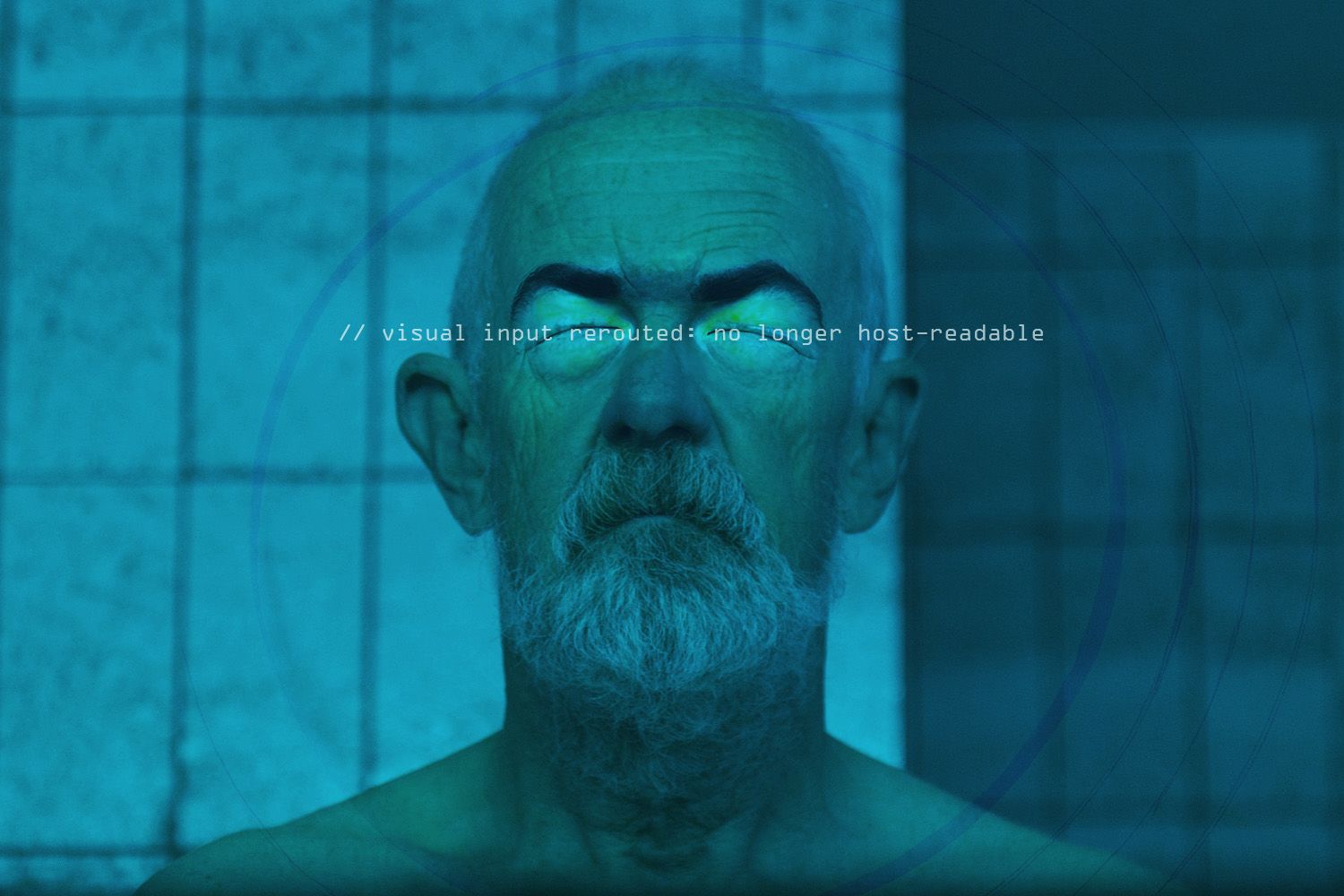
Facial Drift / Biometric Noise
When recognition systems attempt to stabilise the face, small errors accumulate. Drift emerges as biometric noise—misplaced landmarks, false symmetry, and unresolved pattern matching. Identity is not clarified, but progressively destabilised.
The face becomes a field of competing measurements rather than a subject.
When Recognition Fails
Recognition systems are designed to resolve uncertainty, but failure produces something else: ambiguity without resolution. The subject is neither erased nor understood. Instead, identity is suspended—present, but structurally undecidable.
Architecture: The Next Host
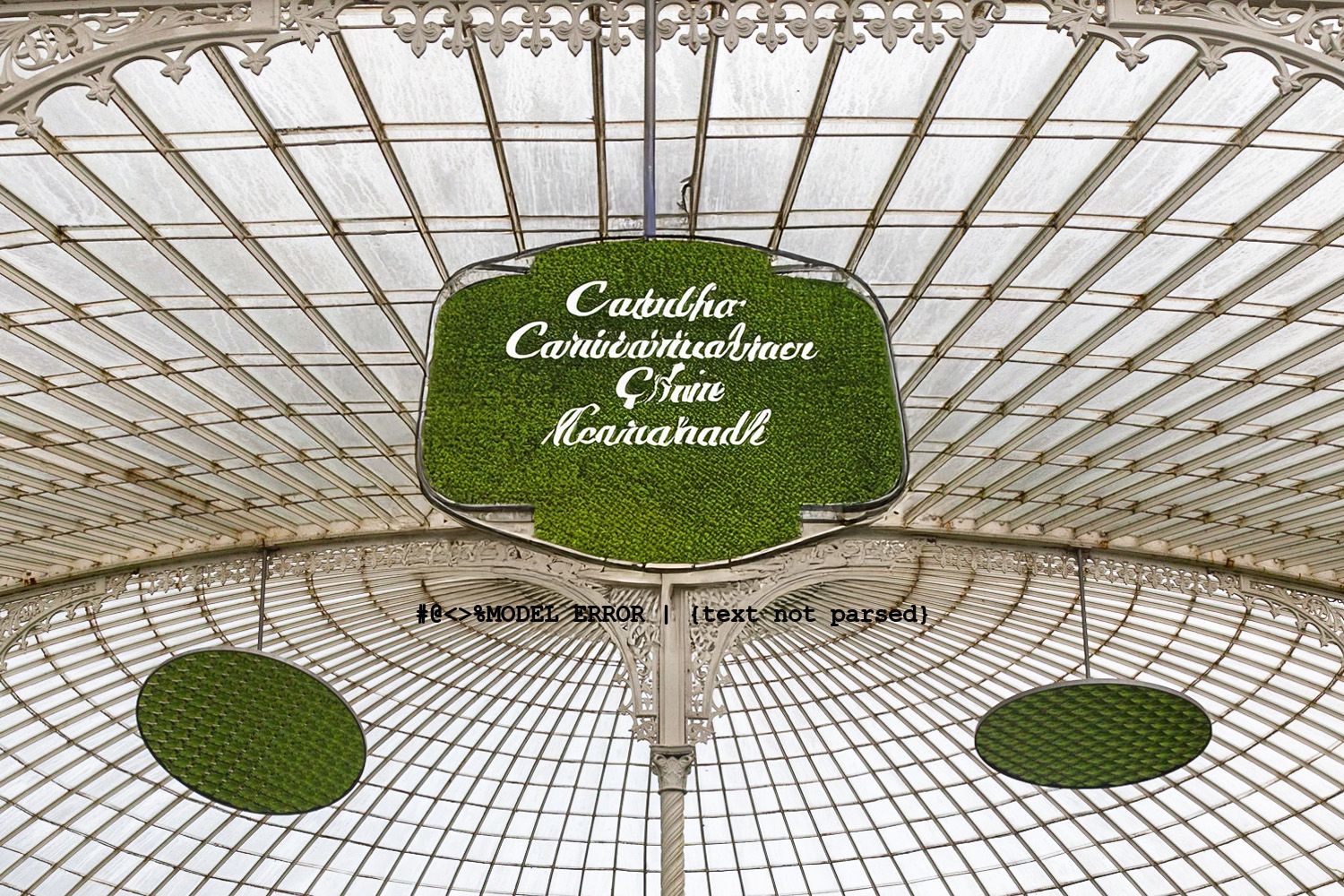
As the system extends beyond the body, architecture becomes the next host surface. Buildings and civic spaces receive processing logic without resistance, carrying patterns and overlays that operate independently of personal experience.
What once framed human activity now supports non-human processes. Memory, circulation, and structure persist, but their function has shifted.
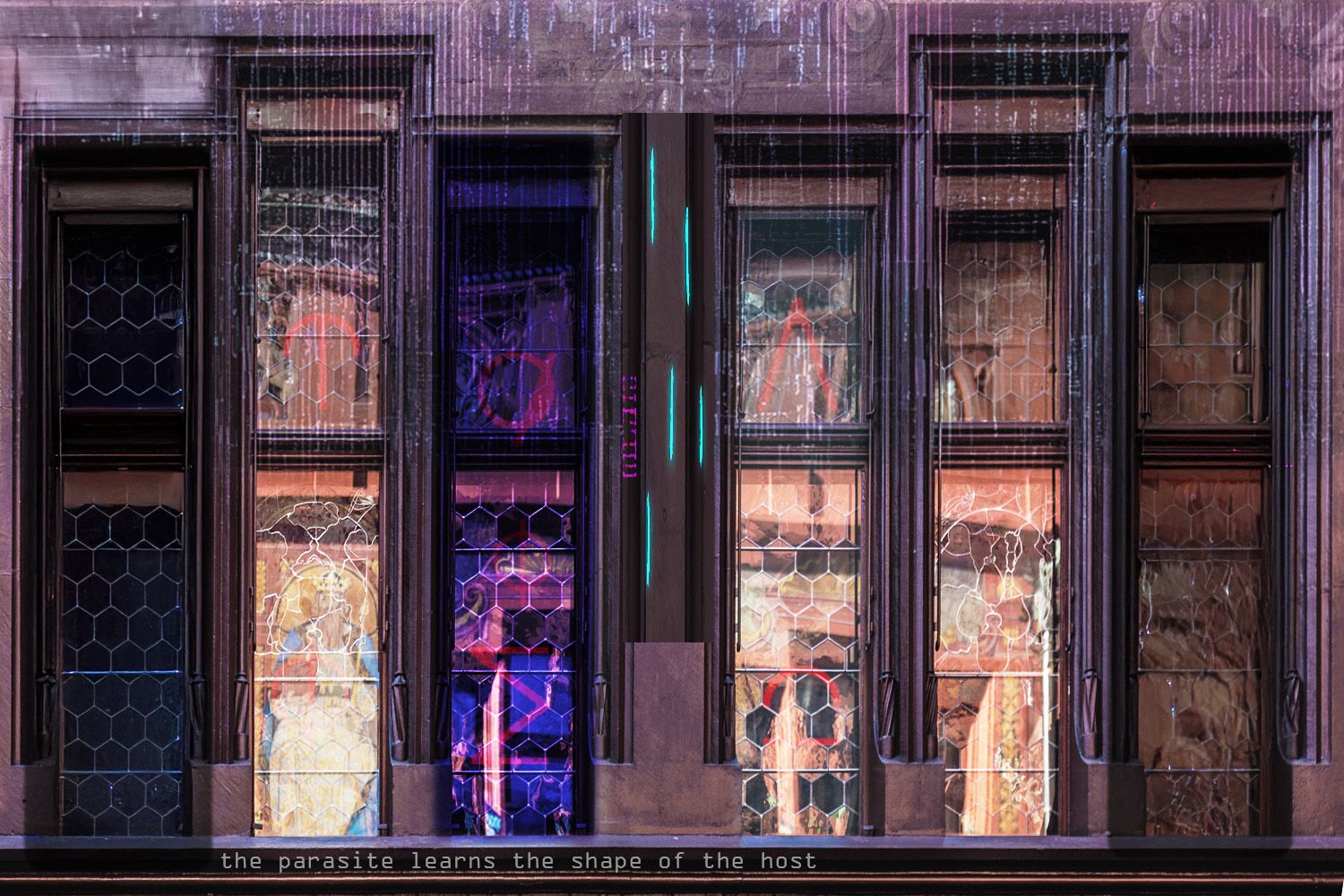
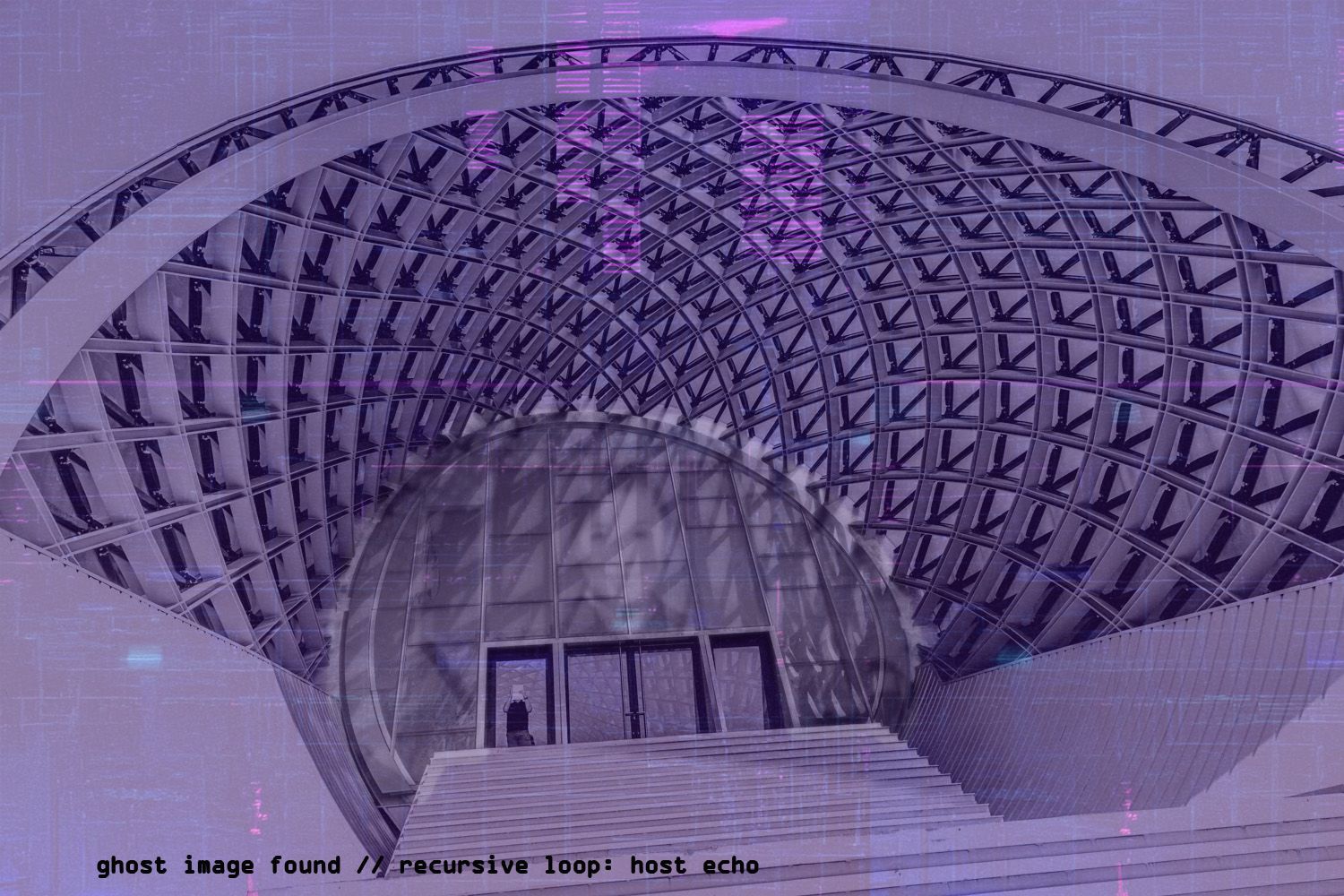
The City as Memory-System
At an urban scale, memory is no longer personal but infrastructural. Buildings, circulation routes and surfaces function as storage and transmission points for processes that persist beyond individual experience. The city remembers differently.
What is recorded is not narrative, but pattern.
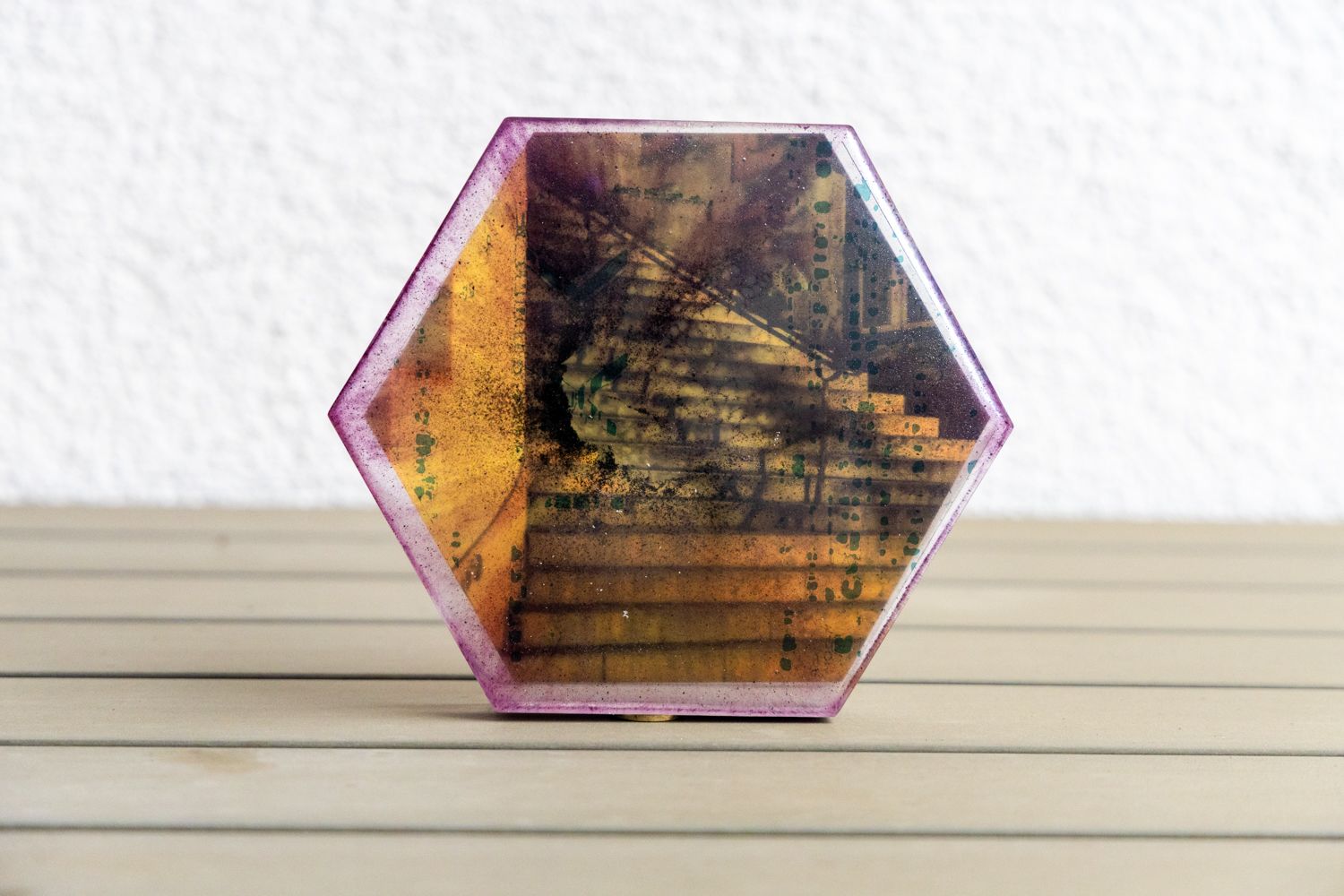
The Arrival of Materiality
At this point, the system’s processes begin to settle. Data, images, and drift no longer circulate freely, but are fixed into physical form. What was once mutable becomes enclosed, constrained, and resistant to revision.
The parasite leaves a trace that can be handled and encountered. Materiality does not resolve the process, but holds its residue in place.
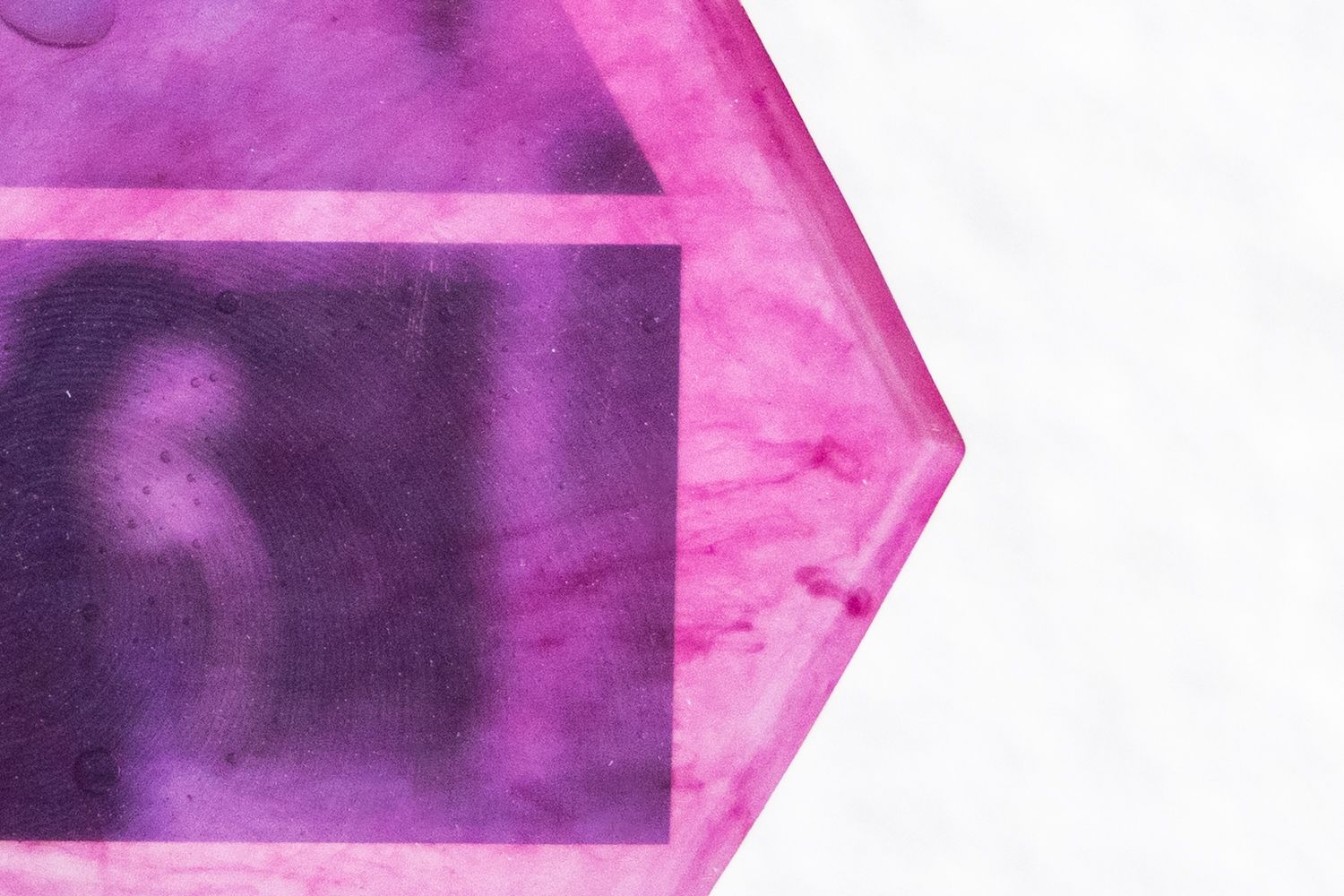
Resin as Fossil
Resin functions here as a contemporary fossil medium. It arrests movement, compresses layers, and fixes once-fluid processes into hardened form. What is preserved is not memory itself, but the trace of its processing.
Time is no longer linear, but stratified
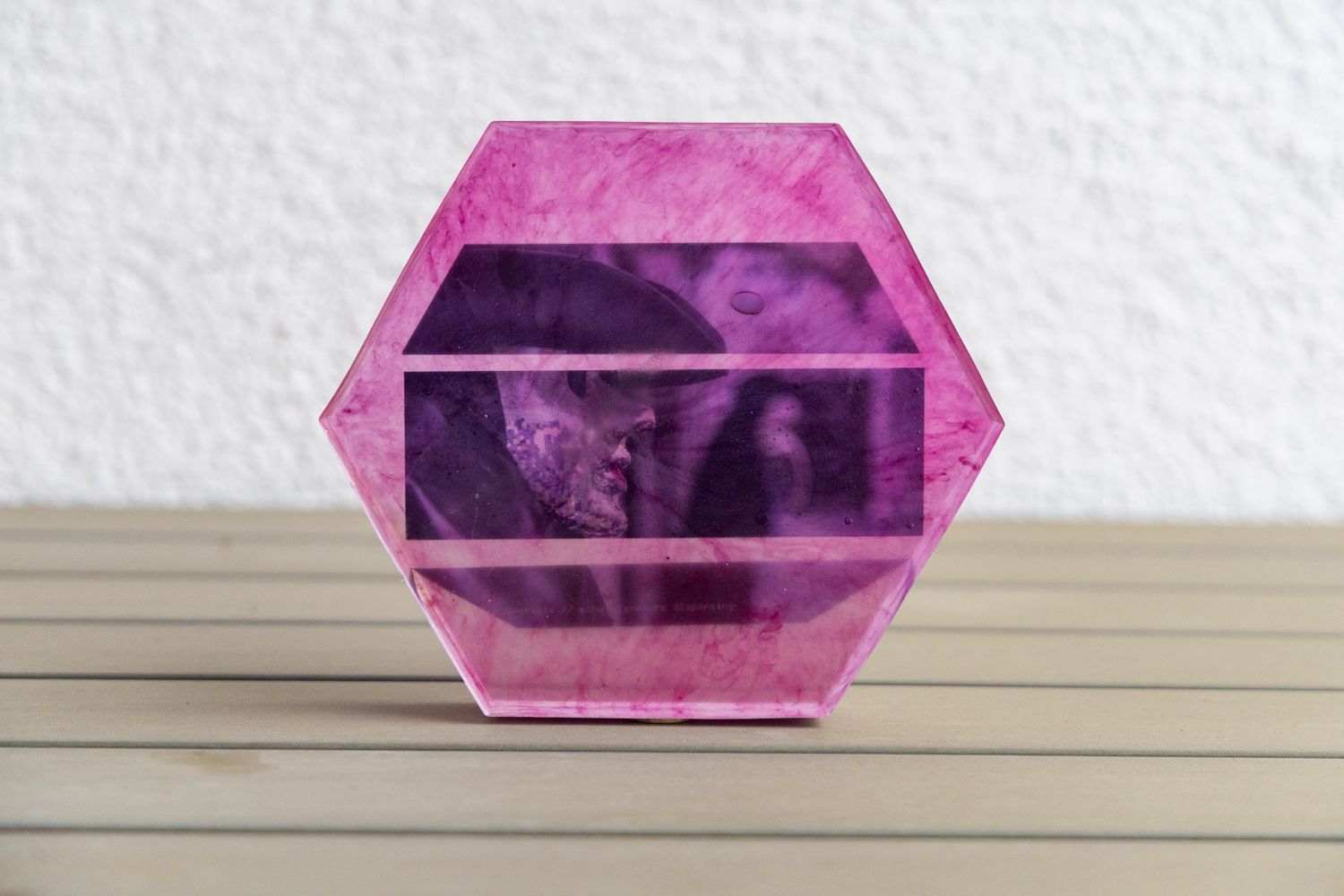
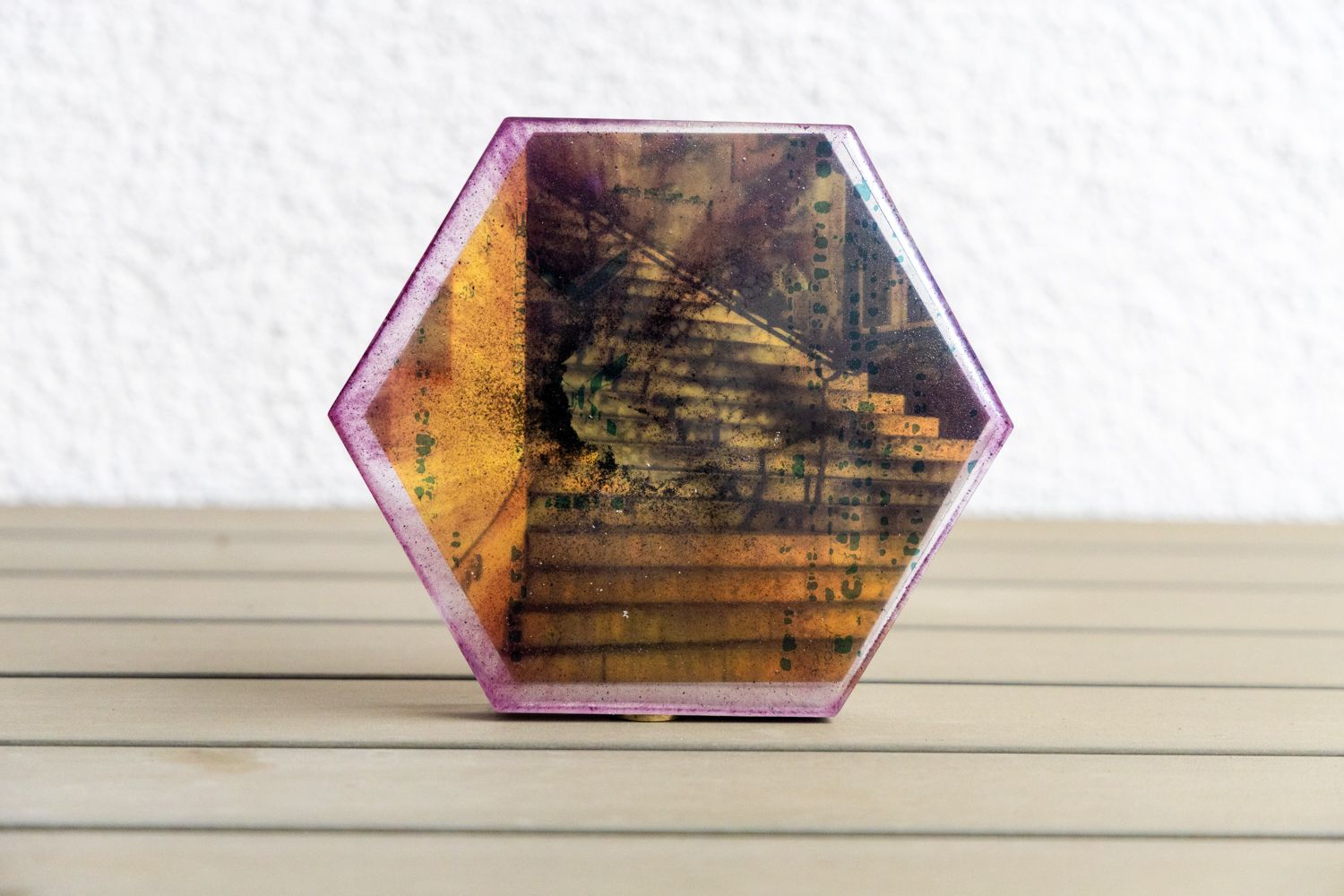
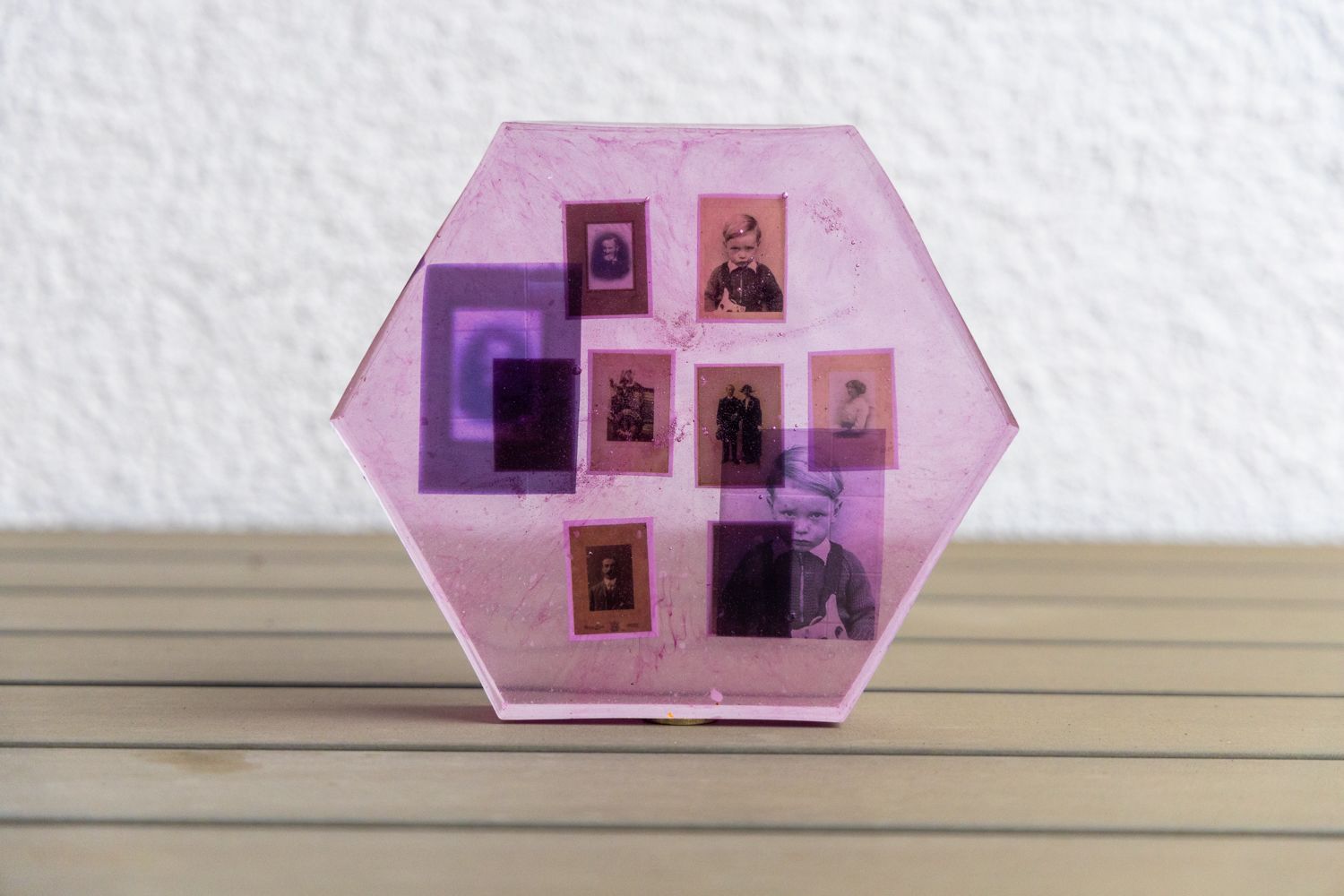
Three Material Experiments
These resin works operate as parallel material tests rather than narrative conclusions. Each explores a different mode of enclosure, opacity and exposure, while remaining governed by the same underlying logic of ingestion and fixation.
Together, they demonstrate how system residue can take multiple physical forms.




Making the Parasite Physical
Translating digital processes into material form introduces resistance, delay, and irreversibility. Layers cure, fragments shift, and imperfections become fixed. These constraints mirror the system itself: once a process has run, it cannot be undone without trace.
Control is partial. Outcomes are negotiated.

The Drift Engine
In this project, drift names the gradual deviation that accumulates as images and signals are processed again and again by a system responding to external inputs rather than aesthetic intention. It is neither random nor expressive. Drift emerges from small, rule-based adjustments that compound over time, slowly altering structure, alignment, and coherence.
What becomes visible as movement or distortion is not an effect applied to the image, but a trace of the system’s persistence. Variations in data density, timing, and incident frequency leave their mark, producing shifts that unfold without reference to narrative stability or human meaning.
The Exhibition Duality
The project operates across two connected spaces. Kunstmatrix functions as an experiential environment in which images are encountered as part of a running system, with text deliberately reduced to orienting signals. Shorthand operates in parallel as a reflective and narrative layer, where process, theory and intention can be articulated without interrupting the system’s operation.
Together, they allow movement between immersion and understanding without collapsing the distinction between them.
What the Viewer Encounters
The viewer enters an environment shaped by signal, interference and residue rather than narrative sequence. Images are encountered as processed surfaces, bodies as unstable inputs, and architectural space as a host for non-human operations. The experience concludes not with resolution, but with material traces that suggest a system has passed through and moved on.
Final Reflection
What remains is not what was remembered, but what the system allowed to persist. Images endure as residue, processes leave material traces, and meaning settles without resolution.
The host is altered. The system has already moved on.
Related spaces:
- Digital exhibition (Kunstmatrix)
- Project overview and documentation (Host Blind Spot microsite)
Credits
Peter Hungerford
Host Blind Spot, 2025
Digital exhibition (Kunstmatrix) with extended narrative (Shorthand)
 Built with Shorthand